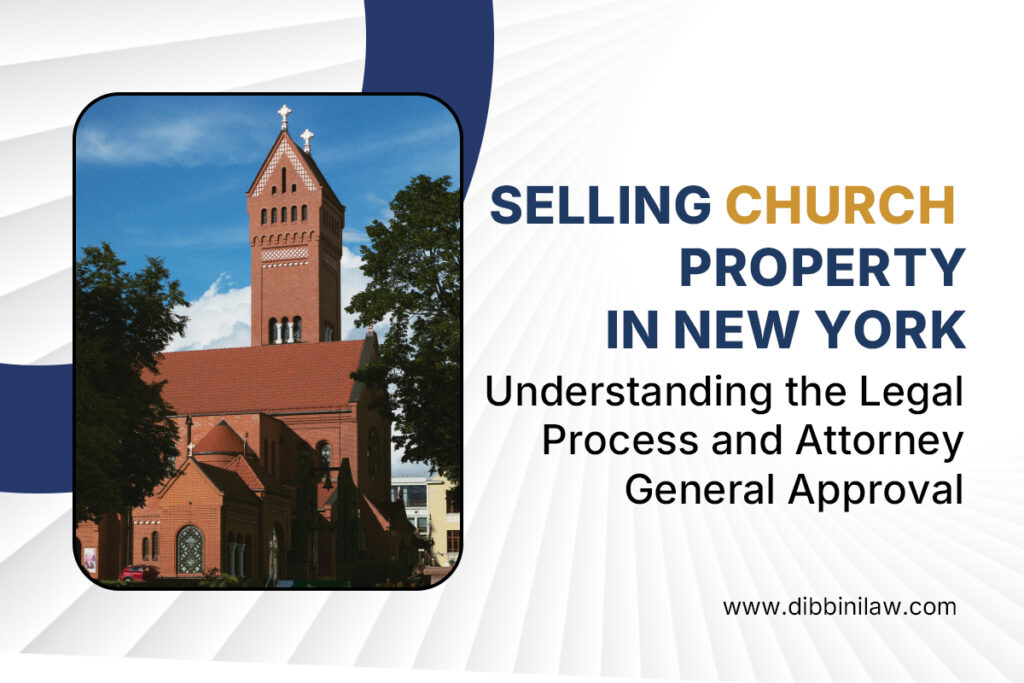
Selling property owned by a religious organization, such as a church, involves a unique set of legal requirements that differ from typical real estate transactions. In New York, Attorney General (AG) approval is required for the sale of church-owned property to ensure that the transaction is in the best interest of the congregation and complies with state laws.
At James G. Dibbini & Associates, P.C., we have extensive experience representing religious institutions in real estate matters. This blog outlines the key steps involved in the process and highlights the importance of proper legal guidance to ensure a smooth and compliant transaction.
Key Steps in Selling Church Property
Congregational Approval
Before proceeding with the sale, the church’s governing body (e.g., board of trustees) must pass a resolution authorizing the sale. In most cases, approval from the congregation is also required through a formal vote, as outlined in the church’s bylaws.
Drafting the Contract of Sale
Once internal approvals are secured, a real estate attorney drafts or reviews the contract of sale to ensure that the terms protect the church’s interests and comply with legal requirements.
Filing a Petition with the New York Attorney General
Under New York Religious Corporations Law (RCL) § 12, churches must obtain approval from the New York State Attorney General’s Office before transferring real property. This process involves filing a petition that includes:
- A copy of the signed contract of sale
- Corporate resolutions authorizing the sale
- A detailed explanation of how the sale benefits the church
- Financial documentation related to the property
- An affidavit from church officers outlining the decision-making process
Attorney General Review and Approval
The AG’s office will review the petition to ensure the transaction is fair, reasonable, and in the best interest of the church and its congregation. In some cases, the AG may request additional documentation or information.
If the AG denies the petition, the church may need to seek approval from the New York State Supreme Court.
Closing the Transaction
Once the AG grants approval, the sale can proceed to closing, where final documents are signed, funds are transferred, and ownership is officially conveyed.
Why Legal Representation Is Essential
Selling church property is more complex than standard real estate transactions. Failing to follow the proper legal procedures can result in delays, legal disputes, or even the invalidation of the sale.
At James G. Dibbini & Associates, P.C., we provide comprehensive legal support to religious institutions, including:
✔ Drafting and reviewing contracts of sale
✔ Guiding churches through internal governance requirements
✔ Preparing and filing petitions with the Attorney General’s Office
✔ Representing clients in court if AG approval is denied
✔ Ensuring compliance with all legal obligations throughout the process
If your church is considering selling property, contact us today to schedule a consultation. We’ll help you navigate the legal complexities with confidence and care.
The attorneys at James G. Dibbini & Associates, P.C. collectively have over 70 years of experience providing legal services in the areas of: