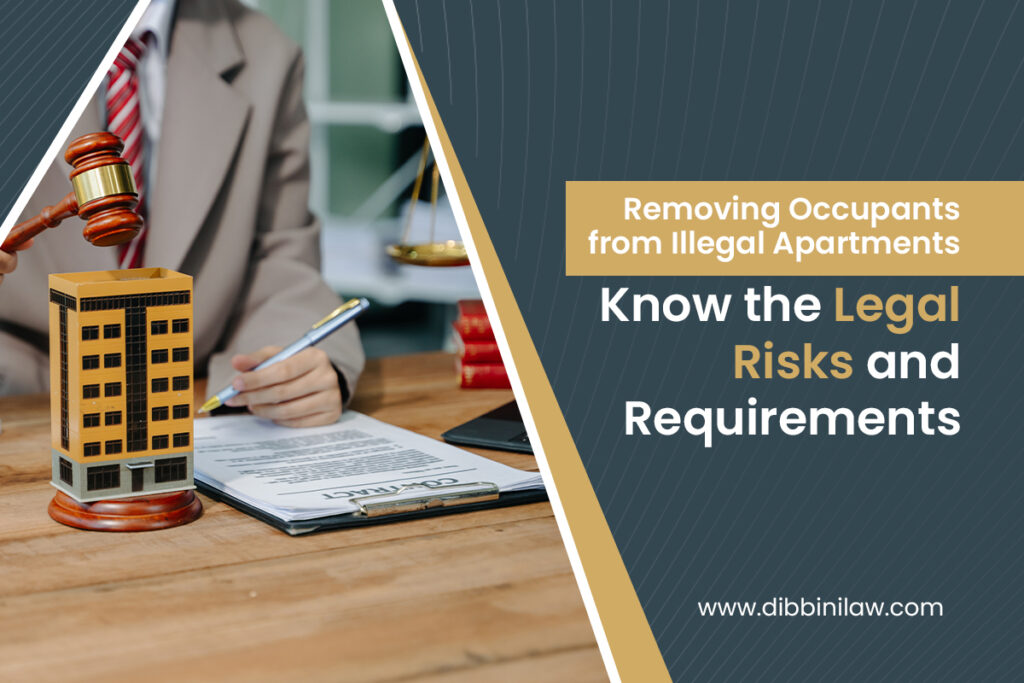
Renting out an apartment that does not have a valid Certificate of Occupancy (CO)—commonly referred to as an illegal apartment—exposes landlords to serious legal and financial risks. If you find yourself needing to remove an occupant from such a unit, it is essential to understand the rights and obligations of both landlord and tenant, as well as the potential consequences of noncompliance.
What Is an Illegal Apartment?
An apartment is considered illegal if it lacks a valid Certificate of Occupancy or is being used in a way that violates the existing CO for the building. Common examples include:
- Basement or cellar units not approved for residential use
- Unpermitted conversions of single-family or two-family homes into multi-unit dwellings
- Apartments created without proper building permits or inspections
Risks of Renting Illegal Apartments
Landlords who rent illegal apartments expose themselves to multiple risks, including:
- Violations and fines from the local building or housing department
- Orders to vacate the apartment, often on an expedited basis
- Ineligibility to enforce lease terms or collect rent in court
- Increased civil liability in the event of injury or damage
- And most critically:
If a claim arises—such as a fire, accident, or injury—the landlord’s insurance company may deny coverage due to the illegal occupancy. This could result in substantial out-of-pocket liability for property damage, personal injury claims, or wrongful death suits.
Tenant Rights in an Illegal Apartment
Even when a unit is illegal, tenants retain certain legal rights. Courts will often treat the relationship as a de facto tenancy, especially if rent has been accepted. Notably:
- Tenants must be given proper notice before legal proceedings can begin
- Courts generally do not allow landlords to recover rent arrears on illegal apartments
- Tenants may raise the illegality of the unit as a defense in nonpayment proceeding
How to Legally Remove an Occupant
To remove an occupant from an illegal apartment, you must follow strict legal procedures:
Notice Requirements
Any notice must comply with New York Real Property Law and applicable local statutes.
Holdover Proceedings
Once notice has expired, you may initiate a holdover eviction proceeding in Housing Court. Keep in mind:
- You cannot recover unpaid rent for the period the apartment was illegally occupied
- Courts focus on possession, not money judgments, in these cases
- Accepting rent during the process may reinstate tenancy rights, complicating the case
Important Reminders
- Do not use self-help methods such as changing locks or cutting off utilities—these are illegal and can lead to fines or criminal charges
- Consult an experienced attorney to ensure compliance and reduce exposure
- Consider bringing the apartment into compliance to preserve future rental income and limit risk
We’re Here to Help
At James G. Dibbini & Associates, P.C., we have extensive experience helping landlords navigate complex legal situations, including illegal occupancy and tenant removal. If you are unsure about the legal status of a unit or how to proceed, our team is ready to assist.
Call us at (914) 240-8270 or email jdibbini@dibbinilaw.com to schedule a consultation.
The attorneys at James G. Dibbini & Associates, P.C. collectively have over 70 years of experience providing legal services in the areas of: